
#1
Netdata
High-resolution real-time monitoring for servers, containers, and apps with interactive dashboards, alerting, and extensive integrations for troubleshooting and observability.
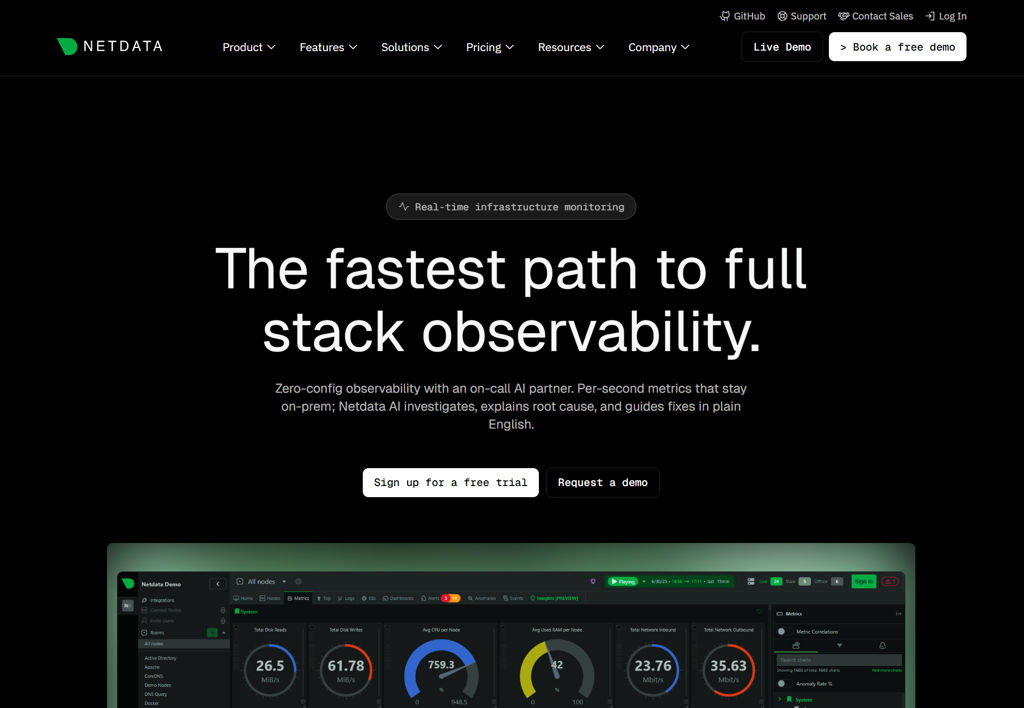
Netdata is a real-time performance monitoring and troubleshooting platform for hosts, containers, and applications. It collects high-frequency metrics, visualizes them in interactive dashboards, and helps operators detect anomalies and investigate incidents quickly.
Key Features
- High-resolution, per-second (and finer) metric collection with low-latency visualization
- Interactive web dashboards with drill-down charts, correlations, and per-dimension views
- Large library of collectors/plugins for OS, containers, databases, web servers, and common services
- Health/alerting engine with configurable alarms and notifications (via popular notification channels)
- Metrics export/streaming to external time-series/observability systems (commonly Prometheus/OpenMetrics, Graphite, InfluxDB, and others)
- Distributed setups with agents and optional centralized aggregation/streaming (Netdata “streaming”)
- Auto-discovery for many environments and integrations (including Kubernetes)
Use Cases
- Troubleshoot sudden CPU, memory, disk I/O, or network regressions on Linux servers in real time
- Monitor containers/Kubernetes nodes and quickly correlate resource saturation with specific services
- Build alerting for infrastructure and application health signals and route notifications to on-call channels
Limitations and Considerations
- Long-term retention and advanced historical analytics typically rely on external storage/backends rather than the agent alone
- Some advanced features in Netdata’s ecosystem may be oriented around the vendor Cloud offering, depending on the deployment approach
Netdata is well-suited for operators who need immediate visibility into system performance and fast root-cause analysis. Its strength is high-frequency metrics plus an opinionated troubleshooting UI, complemented by broad integrations for alerting and exporting data to existing observability stacks.
77.3kstars
6.3kforks