
OhDear!

Best Self Hosted Alternatives to OhDear!

A curated collection of the 6 best self hosted alternatives to OhDear!.

Oh Dear! is a website monitoring SaaS that checks uptime, SSL/certificate expiry, DNS, broken links, mixed content, performance and scheduled tasks, and sends alerts to help teams detect and resolve website and API availability and health issues.

Alternatives List

#1
Uptime Kuma

Uptime Kuma

Self-hosted uptime monitoring for websites, APIs, and services with status pages, rich notifications, and multi-protocol checks.
Uptime Kuma screenshot

Uptime Kuma is a self-hosted uptime monitoring tool for tracking availability and latency of websites, APIs, and network services. It provides a web dashboard to manage monitors, view history, and receive notifications when checks fail.

Key Features

  • Multiple monitor types (HTTP(s), TCP port, Ping, DNS, keyword search, etc.) to fit common availability checks
  • Configurable intervals, retries, timeouts, and status history for each monitor
  • Alerting via many notification providers (e.g., email/SMTP, Telegram, Discord, Slack, Webhooks, and more)
  • Public or private status pages with custom branding and incident-style visibility for selected monitors
  • TLS/SSL certificate expiry monitoring for HTTPS endpoints
  • Multi-user support with authentication and session management
  • Docker-based deployment support and lightweight standalone operation

Use Cases

  • Monitor public websites and APIs and alert on downtime or slow responses
  • Track internal services (databases, NAS, homelab apps) via TCP/Ping and centralize alerts
  • Publish a simple external status page for customers or internal stakeholders

Limitations and Considerations

  • It is primarily an availability/health checker and does not replace full observability stacks (logs/traces/metrics)

Uptime Kuma is a practical choice for individuals and teams needing an easy-to-operate monitoring dashboard with broad notification support. It suits homelabs and small-to-medium deployments where quick setup and clear uptime history are priorities.

81kstars
7.2kforks

#2
Healthchecks

Healthchecks

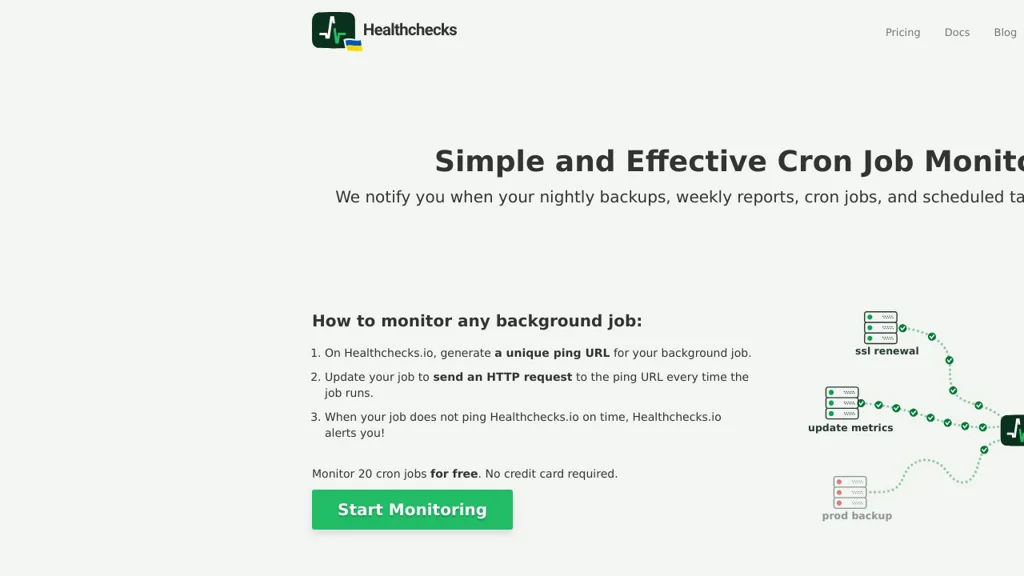
Monitor cron jobs and background tasks by pinging unique URLs. Get alerts for missed runs, failures, and long runtimes via email, SMS, and popular integrations.

Healthchecks screenshot

Healthchecks is a cron job and background task monitoring service built around simple “ping” URLs. You add a check, instrument your job to call the provided endpoint, and Healthchecks tracks schedules, runtimes, and failures to alert you when something goes wrong.

Key Features

  • Ping-based monitoring for cron jobs, one-off scripts, and background workers (success, fail, and start signals)
  • Flexible scheduling (period/grace time) with detection of missed runs and late jobs
  • Status signals: success, failure, and “start” to detect long-running/hung tasks
  • Notification channels including email and multiple third-party integrations (webhooks and chat/incident tools)
  • Teams and projects with role-based access for multi-user setups
  • Maintenance periods / downtime handling and per-check pause controls
  • Check-level API and management UI for creating and maintaining checks
  • Timezone-aware reporting and history of pings/runs for troubleshooting

Use Cases

  • Alert when backups, database maintenance, or ETL pipelines don’t run on schedule
  • Track long-running batch jobs and detect hangs using “start” + timeout
  • Monitor periodic health tasks in container/Kubernetes environments via HTTP pings

Limitations and Considerations

  • Healthchecks monitors scheduled execution via pings; it is not a full infrastructure/metrics APM system.

Healthchecks is a lightweight, reliable way to get notified about missed or failed scheduled jobs without deploying a full monitoring stack. It works well for ops teams and developers who want simple instrumentation, clear run history, and flexible alert routing.

9.8kstars
940forks
#3
Gatus

Gatus

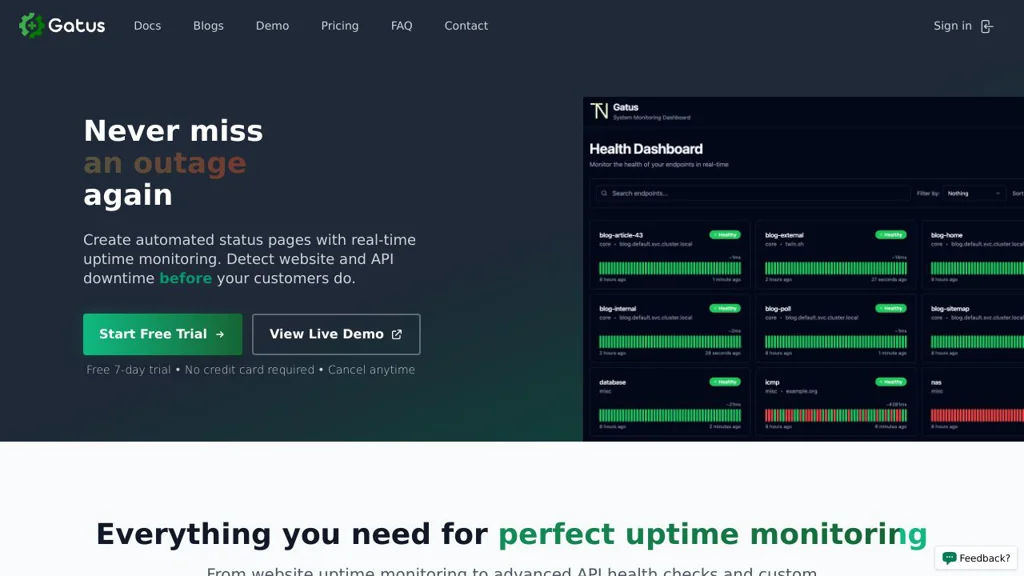
Self-hosted uptime/health monitoring for endpoints with alerting, conditions on response content/latency, and a built-in status page.

Gatus screenshot

Gatus is a lightweight, self-hosted service for monitoring the availability and correctness of HTTP and other endpoints. It runs scheduled health checks defined in a simple configuration file, evaluates conditions (status code, latency, and response content), and exposes a web UI that acts as both a dashboard and status page.

Key Features

  • Health checks for endpoints with configurable intervals, timeouts, and retry behavior
  • Condition-based validation (e.g., status code, response time, headers/body content via pattern matching)
  • Built-in dashboard/status page UI for quick visibility into current state and history
  • Alerting integrations (e.g., Slack/Discord/Teams-style webhooks, email, and other providers depending on configuration)
  • Grouping and organization of checks (useful for multi-service or multi-environment setups)
  • Designed to be easy to run in containers and integrate into DevOps workflows

Use Cases

  • Monitor internal and public HTTP services/APIs and get notified on failures
  • Validate “healthy” responses beyond uptime (e.g., specific JSON fields, keywords, or latency thresholds)
  • Publish a simple status page for homelab/services without external SaaS monitoring

Limitations and Considerations

  • Primarily configuration-file driven; advanced UI-based management/workflows are limited compared to SaaS platforms
  • Feature set focuses on endpoint checks; it is not a full APM/distributed tracing solution

Gatus is a practical option when you want straightforward uptime and response validation checks, quick deployment, and flexible alerting without relying on external monitoring services. Its emphasis on simple configuration and a built-in status UI makes it suitable for homelabs and small-to-medium service fleets.

9.6kstars
634forks
#4
Kener

Kener

Kener is a self-hosted status page that tracks service uptime, incidents, and maintenance with a clean UI and configurable monitors, notifications, and public pages.

Kener screenshot

Kener is a status page application for publishing real-time availability information about your services. It helps teams communicate outages and maintenance clearly, with configurable components, incident updates, and historical uptime views.

Key Features

  • Public status page with components/services, overall status, and historical uptime views
  • Incident management: create incidents, post updates, and resolve with timelines for transparency
  • Maintenance windows to announce planned downtime and reduce support load
  • Monitoring checks for endpoints (e.g., HTTP/HTTPS) with configurable intervals and timeouts
  • Notifications and integrations (commonly via webhooks) to broadcast incident changes
  • Configuration-driven setup (environment/config files) suitable for reproducible deployments

Use Cases

  • Publish a public status page for SaaS/apps/APIs to reduce “is it down?” support requests
  • Internal status dashboard for infrastructure components (databases, queues, key APIs)
  • Transparent incident communication during outages and planned maintenance

Limitations and Considerations

  • Feature depth may be smaller than enterprise hosted offerings (advanced analytics/SLO tooling varies by version)
  • Integration breadth depends on available built-in providers and webhook support

Kener is a lightweight way to communicate service health with a modern UI and straightforward operations. It fits teams that want a clear, hosted status presence while keeping configuration and deployment under their control.

4.7kstars
235forks
#5
Statping-ng

Statping-ng

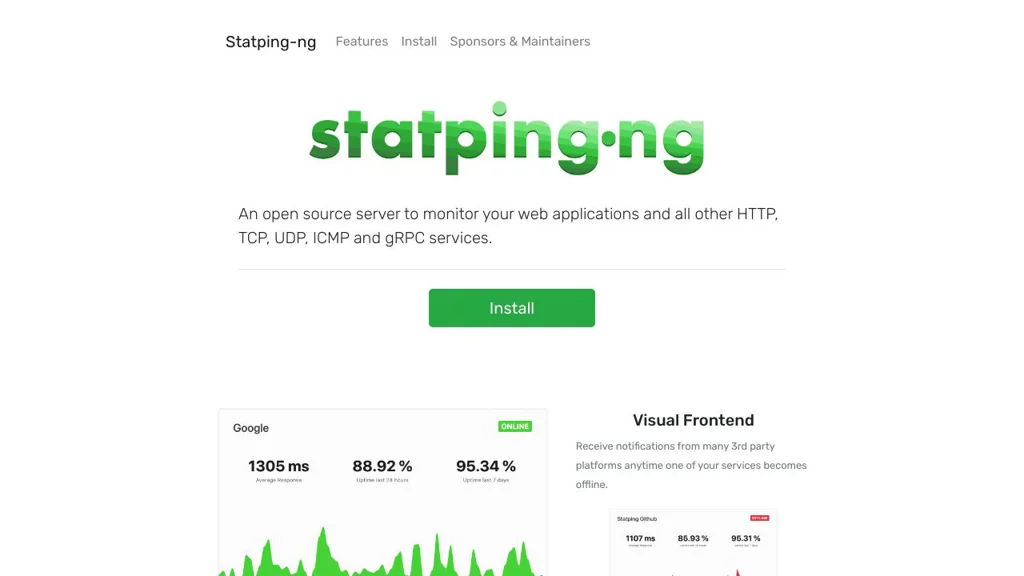
Statping-ng is an uptime monitoring and status page platform for tracking HTTP and other service checks, sending alerts, and publishing incident updates.

Statping-ng screenshot

Statping-ng is a self-hosted uptime monitoring service with a built-in public status page. It runs scheduled health checks against your services, stores results, and can notify you when incidents occur, making it suitable for small teams and homelabs.

Key Features

  • Public status page with service groups, incident posts, and historical uptime
  • Scheduled health checks (primarily HTTP/HTTPS; additional check types available depending on configuration/version)
  • Notification/alerting integrations (e.g., email and common chat/push providers)
  • Multi-user administration with roles/permissions
  • Metrics and charts for response time and uptime history
  • API for managing services/checks and status content
  • Runs in a single binary/container with support for common databases

Use Cases

  • Publish a public status page for customer-facing services and APIs
  • Monitor internal services (reverse proxies, apps, endpoints) and alert on downtime
  • Track SLA/uptime history for infrastructure changes and maintenance

Limitations and Considerations

  • Feature set and integrations can vary across releases/forks; verify supported check types and notifiers for your target version.

Statping-ng is a practical option when you want both uptime checks and a simple status page in one deployable service. It focuses on lightweight monitoring, incident communication, and straightforward alerting rather than full observability.

1.9kstars
181forks
#6
Domain Locker

Domain Locker

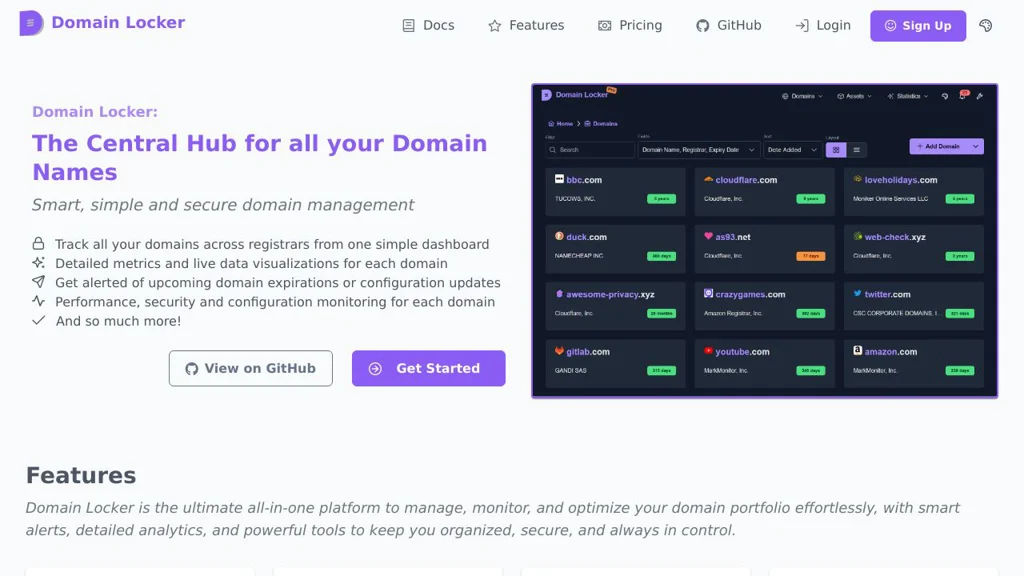
A self-hosted dashboard to track domain, DNS, and SSL certificate expiry with status checks and notifications.

Domain Locker screenshot

Domain Locker is a self-hosted web app for tracking your domains and certificates in one place. It helps you avoid outages by monitoring expiry dates and basic domain/website status signals, and by surfacing upcoming renewals in a simple dashboard.

Key Features

  • Dashboard for tracking domain expiration dates and time-to-expiry
  • SSL/TLS certificate expiry monitoring for domains
  • DNS and WHOIS-based domain metadata lookups (registrar/expiry where available)
  • Status checks for associated websites (basic reachability/health signals)
  • Configurable alerts/notifications for upcoming expirations
  • Designed for managing multiple domains/services from a single UI

Use Cases

  • Keep personal or homelab domains from expiring unexpectedly
  • Track renewal windows for small businesses with multiple domains
  • Monitor SSL certificate expirations to prevent HTTPS outages

Limitations and Considerations

  • WHOIS/registrar data quality and availability varies by TLD/registrar and may be rate-limited
  • Some checks depend on external DNS/WHOIS/HTTP reachability and can fail in restricted networks

Domain Locker is useful for anyone who owns multiple domains and wants a lightweight, centralized way to see what is expiring soon. It provides a practical safety net for domain renewals and certificate maintenance with a straightforward, self-managed setup.

1.1kstars
74forks

Why choose an open source alternative?

  • Data ownership: Keep your data on your own servers
  • No vendor lock-in: Freedom to switch or modify at any time
  • Cost savings: Reduce or eliminate subscription fees
  • Transparency: Audit the code and know exactly what's running