
Zoho Mail (Calendar/Contacts)

Best Self Hosted Alternatives to Zoho Mail (Calendar/Contacts)

A curated collection of the 3 best self hosted alternatives to Zoho Mail (Calendar/Contacts).

Zoho Mail is a secure, ad-free email hosting service with integrated Calendar and Contacts. It enables business email management, event scheduling, shared calendars, contact organization, and sync across devices and Zoho apps.

Alternatives List

#1
Radicale

Radicale

A fast, lightweight CalDAV/CardDAV server for syncing calendars, contacts, and tasks with standard clients, featuring filesystem storage and flexible authentication.
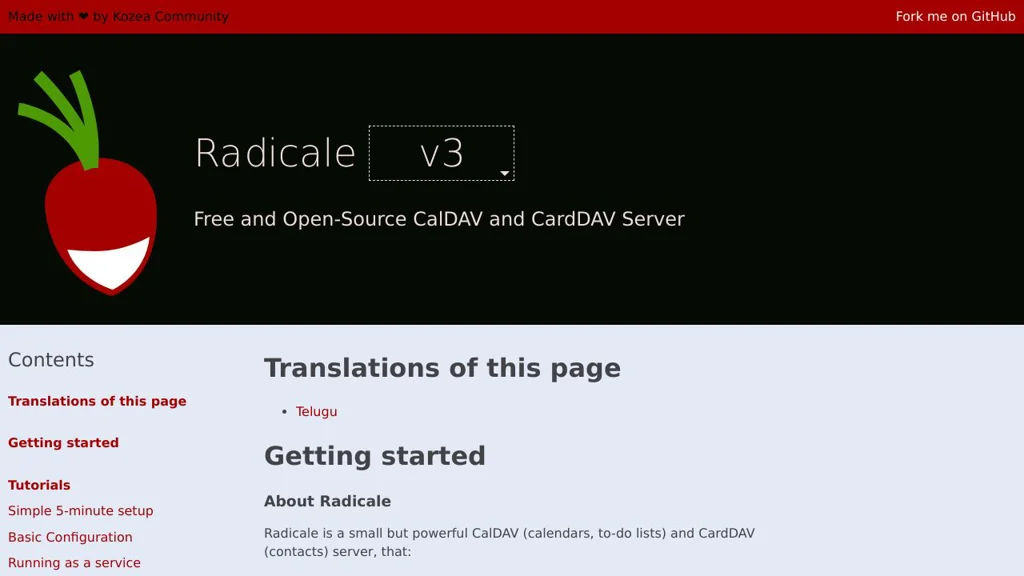
Radicale screenshot

Radicale is a minimalist CalDAV and CardDAV server that lets you sync calendars, address books, and tasks with standards-compliant clients (e.g., Thunderbird/Lightning, DAVx⁵, macOS/iOS, GNOME). It focuses on being easy to deploy and administer while still providing the core DAV features needed for personal or small team groupware.

Key Features

  • CalDAV and CardDAV support for calendars, contacts, and VTODO tasks
  • Stores data as plain files on disk (human-readable, easy to back up and version)
  • Built-in web interface for browsing collections (optional) and DAV discovery
  • Flexible authentication/authorization options (e.g., htpasswd, remote user, custom backends)
  • Per-user collections and permissions via configuration
  • Works behind reverse proxies; supports TLS via a fronting web server
  • Runs as a standalone WSGI application; integrates with common process managers

Use Cases

  • Sync a personal calendar/contacts/tasks across phones and desktops using DAV clients
  • Provide lightweight DAV groupware for a family or small organization
  • Host DAV data in a git-backed directory for audit/history and simple restores

Limitations and Considerations

  • Primarily targets DAV sync; it is not a full “groupware suite” (no email/chat modules)
  • Sharing/ACL capabilities depend on configuration and client support and may be less ergonomic than full suites

Radicale is a good fit when you want a small, standards-based DAV server that is easy to host, keeps data in straightforward files, and interoperates with many existing calendar/contact clients. It prioritizes simplicity and transparency over an all-in-one collaboration platform.

4.3kstars
491forks
#2
Baïkal

Baïkal

Baïkal is a lightweight CalDAV/CardDAV server for syncing calendars, tasks, and contacts with DAV clients, with a simple web admin UI and multi-user support.

Baïkal screenshot

Baïkal is a small, self-hostable groupware backend that provides CalDAV and CardDAV services for syncing calendars, tasks, and contacts across devices and desktop/mobile clients. It is built on top of the SabreDAV stack and is designed to be easy to deploy and administer.

Key Features

  • CalDAV server for calendars and tasks (VTODO) compatible with common DAV clients
  • CardDAV server for contact sync using vCard
  • Web-based administration panel to create/manage users, address books, and calendars
  • Multi-user support with per-user collections (calendars/address books)
  • Uses an SQL database backend (SQLite by default; also supports MySQL and PostgreSQL)
  • Standards-based DAV interoperability via the SabreDAV library

Use Cases

  • Sync personal calendars/tasks between macOS/iOS, Android (DAVx⁵), and desktop clients
  • Provide shared calendars/contacts for a family or small team without a full groupware suite
  • Run a lightweight DAV endpoint behind an existing web server/reverse proxy

Limitations and Considerations

  • Focused specifically on CalDAV/CardDAV; it is not a full mail/chat/collaboration suite
  • Interoperability depends on client DAV support; some clients may require extra configuration

Baïkal is a good fit when you want standards-based calendar/contact synchronization with minimal overhead. Its simple admin UI and SabreDAV foundation make it practical for small deployments that need reliable DAV services without additional groupware components.

3kstars
304forks
#3
EspoCRM

EspoCRM

Self-hosted CRM with leads/opportunities, email & calendar sync, marketing automation, workflows, and extensible entity-based customization.

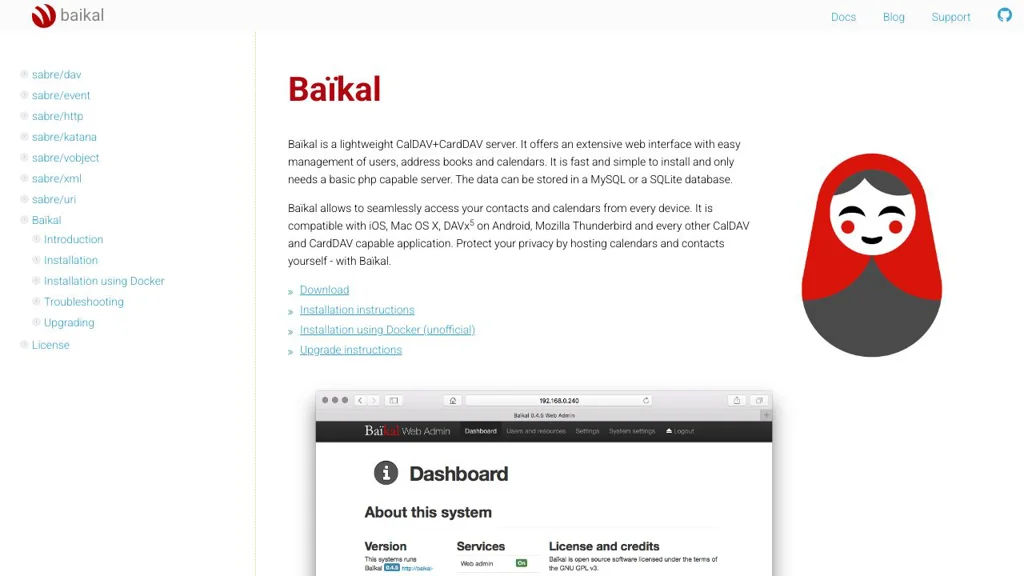
EspoCRM screenshot

EspoCRM is a self-hosted customer relationship management (CRM) platform focused on managing leads, accounts, contacts, opportunities, and customer interactions in a single system. It provides sales pipeline tools, email-centric communication features, and a flexible entity model that supports customization and extensions.

Key Features

  • Sales pipeline management with leads, opportunities, accounts/contacts, activities, and reporting dashboards
  • Email integration (IMAP/SMTP) with email archiving to CRM records and templates for outbound communication
  • Calendar and activities (calls, meetings, tasks) with scheduling and reminders
  • Workflow automation (rules/actions) and business process tools (BPM) for automating CRM operations
  • Role-based access control (teams, roles, permissions) and audit/logging capabilities
  • Custom entities, fields, layouts, relationships, and formulas for tailoring data model and UI
  • Extensions ecosystem (add-ons/modules) and API for integrations

Use Cases

  • Track B2B sales pipelines from lead capture through opportunity stages to close
  • Centralize customer communication by linking emails, calls, meetings, and notes to records
  • Automate routine CRM tasks (assignment, notifications, stage changes) with workflows

Limitations and Considerations

  • Some advanced capabilities are delivered via paid extensions; feature set depends on edition/modules enabled

EspoCRM fits teams that need a customizable, email-integrated CRM with strong automation options and an extensible architecture. It is particularly suitable for organizations wanting control over CRM data and flexible customization without building a CRM from scratch.

2.7kstars
787forks

Why choose an open source alternative?

  • Data ownership: Keep your data on your own servers
  • No vendor lock-in: Freedom to switch or modify at any time
  • Cost savings: Reduce or eliminate subscription fees
  • Transparency: Audit the code and know exactly what's running